Nano-sorbent materials
Exploring MOFs, hybrid hydrogels, and related materials that can capture water vapour from air.

Atmospheric water / nanomaterials
Nerith is a research-led exploration of atmospheric water harvesting, advanced sorbent materials, and modular systems for water independence in difficult climates.
01 / The premise
Nerith began with a direct observation: humid air and water scarcity can exist in the same place. The project asks how advanced water-absorbing materials can be engineered beyond laboratory samples and into practical infrastructure.
The work connects material science with thermal cycles, modular hardware, control systems, storage, buildings, agriculture, and the realities of maintenance in demanding environments.
02 / System
The material is only one part of the system. Airflow, release energy, water handling, and control must work together.
Move ambient air across the active material with controlled flow.
Bind water molecules within a nano-sorbent or hydrogel structure.
Apply a managed thermal cycle to release and condense captured water.
Monitor water quality, storage, delivery, and operating efficiency.
03 / Research directions
Three connected layers define the current Nerith research direction.
Exploring MOFs, hybrid hydrogels, and related materials that can capture water vapour from air.
Translating material behaviour into maintainable units for buildings, agriculture, and remote environments.
Coordinating capture, release, storage, and energy use around local climate and operating conditions.
04 / Journey
The project moved from observation to technical investigation and documented laboratory work.
Open the 2022 lab reportA trip to a humid, water-scarce region established the original problem.
The concept moved into nanomaterial synthesis and practical testing.
Laboratory findings, analytical reports, and project documents were archived.
The focus continues toward integrated, modular, and testable water systems.
05 / Application visions
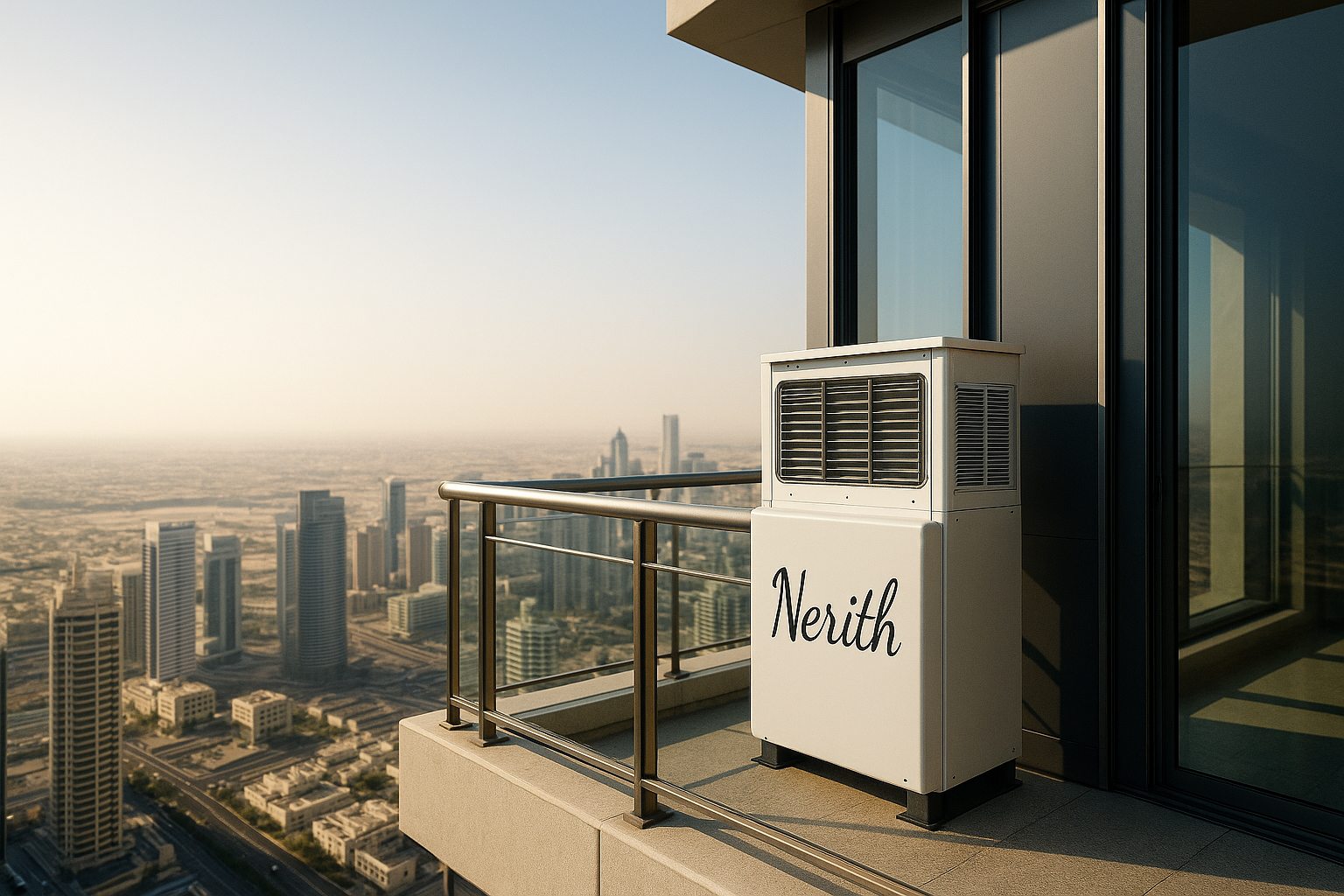
These images communicate possible deployment directions. They are concept visualizations, not photographs of completed products.
Distributed atmospheric water systems integrated close to the point of use.
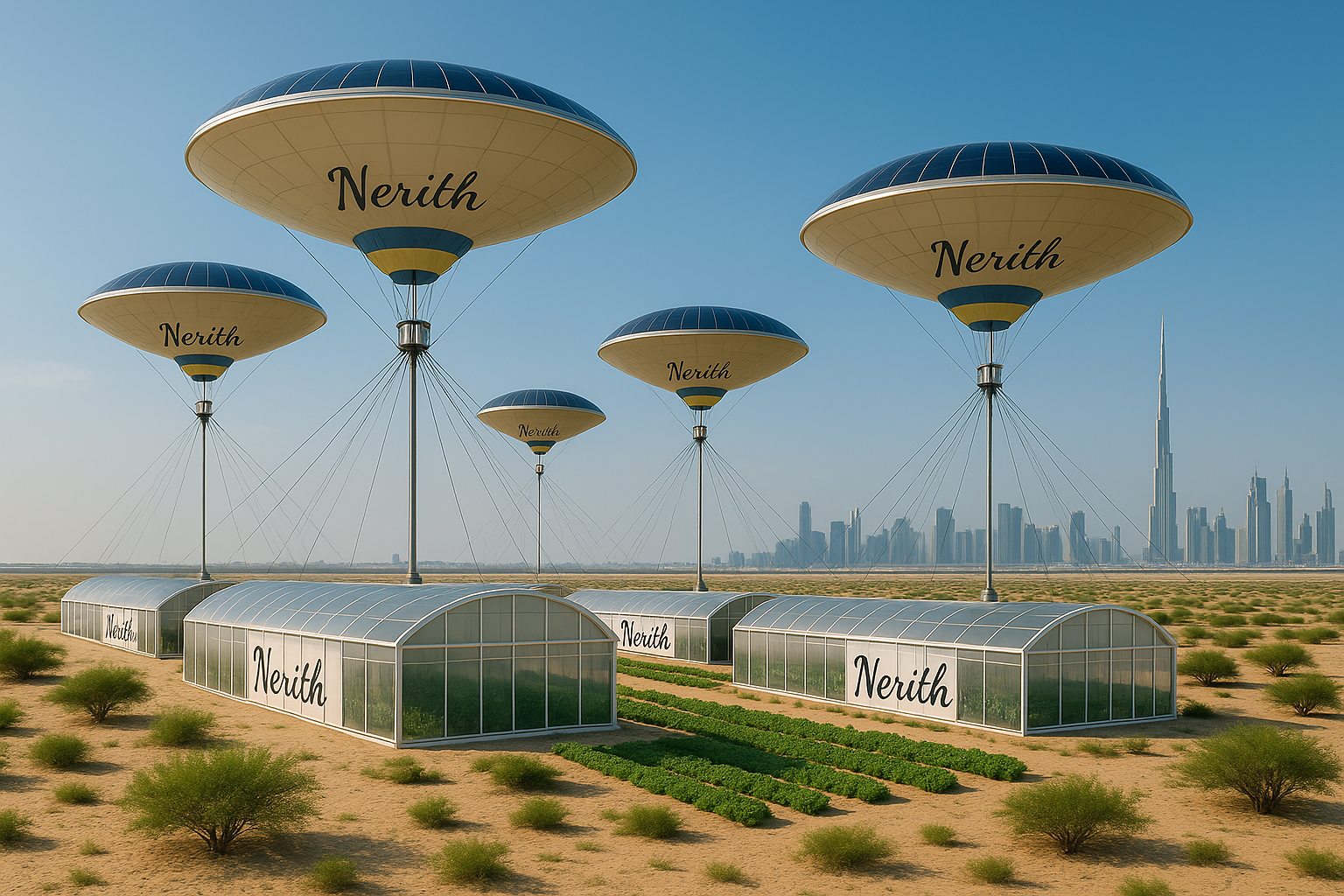
Modular networks envisioned for greenhouses and water-constrained growing environments.
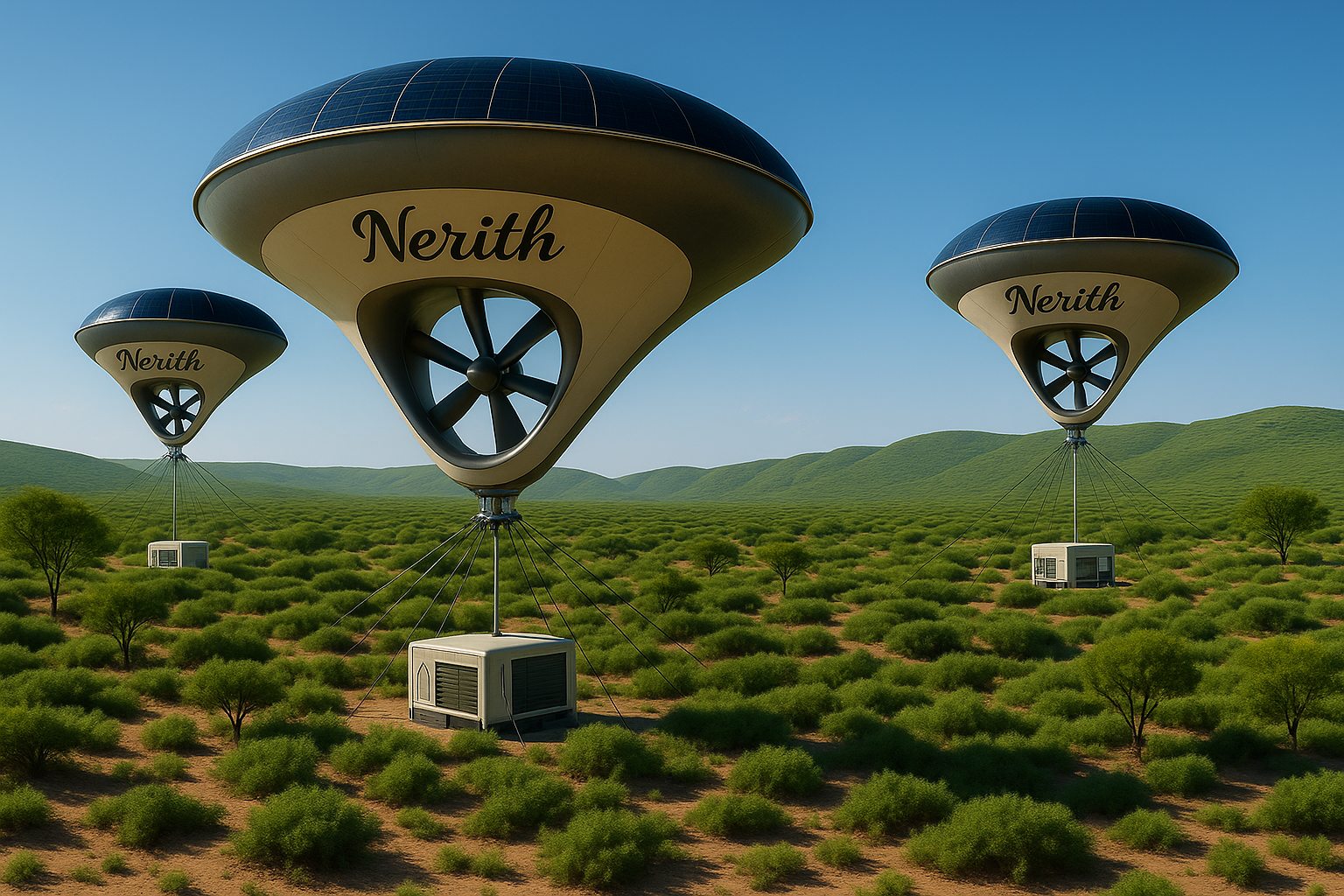
A long-horizon concept for operating capture systems at useful atmospheric conditions.
06 / Evidence archive
Project documents, laboratory material, and raw analytical reporting remain directly accessible.
07 / Document integrity
Timestamp records and detached signatures help verify the history and authenticity of published project files.
08 / Continue